Lithium Battery Prices in Alberton:
What Industrial and Solar Buyers Need to Know
When a warehouse manager in Alberton sits down to budget for a fleet of forklifts, one of the first questions that comes up is simple: what are lithium battery prices going to do to my bottom line? It is a fair question, and it deserves a straight answer rather than a vague sales pitch. Lithium-ion technology has changed dramatically over the past decade, and the cost picture today looks very different from what many buyers remember or expect.
At CHASE Technologies, we work with businesses, outdoor enthusiasts, and solar installers across the East Rand every day. This article breaks down what actually drives lithium battery prices across three key application areas: industrial equipment, recreational vehicles and marine craft, and solar energy storage. Stand-by and UPS battery solutions are a separate category, so we are leaving those for another time.
What Drives Industrial Lithium Battery Prices?
Chemistry, Capacity, and Cycle Life
Industrial lithium batteries are not a commodity you can compare purely on sticker price. The chemistry matters enormously. Lithium Iron Phosphate, commonly called LiFePO4, is the dominant choice for industrial applications because of its thermal stability and long cycle life. A quality LiFePO4 pack rated for 3,000 to 5,000 charge cycles costs more upfront than a cheaper alternative, but the total cost over its working life is significantly lower.
Capacity, measured in kilowatt-hours, is the biggest single driver of lithium battery prices in the industrial segment. A forklift battery running an eight-hour shift in a distribution centre needs enough energy to complete the full shift without a mid-day swap, so undersizing to save money upfront is a false economy. Getting the sizing right from the start is where most of the real savings come from.
Forklift and Logistics Applications
Forklifts and other electric industrial vehicles represent the largest part of what we supply in the Alberton area. Traditional lead-acid packs have long dominated this space, but the math is shifting. A lithium forklift battery charges in two to three hours compared to eight hours for lead-acid, which means one battery per truck instead of two or three rotating packs. When you factor in the elimination of battery room maintenance, watering, and acid handling, the operational cost savings are real and measurable.
Lithium battery prices for forklift applications in South Africa range widely depending on voltage (commonly 24V, 48V, or 80V), capacity, and whether the Battery Management System, or BMS, is integrated or external. Buyers should be cautious of very low-cost imported packs that arrive with no local technical support. When a battery fails in a busy warehouse, downtime costs mount quickly.
Other industrial uses we see regularly include electric pallet jacks, order pickers, airport ground support equipment, and electric vehicles used in mining and agriculture. Each application has its own discharge profile, so the spec sheet matters as much as the price.
What to Ask Before
You Buy
A few questions worth raising with any supplier:
- What is the rated cycle life at 80% depth of discharge?
- Is the BMS locally programmable and serviceable?
- What does the warranty cover, and who handles claims?
- Is there local technical support, or are you on your own if something goes wrong?
These questions separate a good purchase from a regrettable one, regardless of where lithium battery prices sit on any given day.
Recreational Lithium Battery Prices:
A Different Angle
Recreational buyers, think boat owners, camper enthusiasts, and off-road vehicle users, come at this from a different perspective than industrial clients. The priority is weight, size, and the ability to run accessories for extended periods without shore power or an alternator running.
A lithium battery for a bass boat trolling motor or a camper setup offers roughly three to four times the usable energy of an equivalent lead-acid battery at about a third of the weight. For someone towing a trailer up to the Vaal Dam or heading out on a weekend trip from Alberton, those physical properties matter as much as the price per kilowatt-hour.
Recreational lithium packs in South Africa typically range from smaller 12V 50Ah units for light camping loads through to 200Ah and larger packs for serious off-grid setups. Bluetooth-enabled BMS units that let you monitor state of charge from your phone are increasingly common and well worth the small additional cost. Because recreational buyers tend to cycle their batteries far less frequently than industrial users, lithium battery prices here are often easier to justify on quality-of-life grounds alone.
Solar Solutions and Lithium Battery Prices
Why Solar Installers Are Moving to Lithium
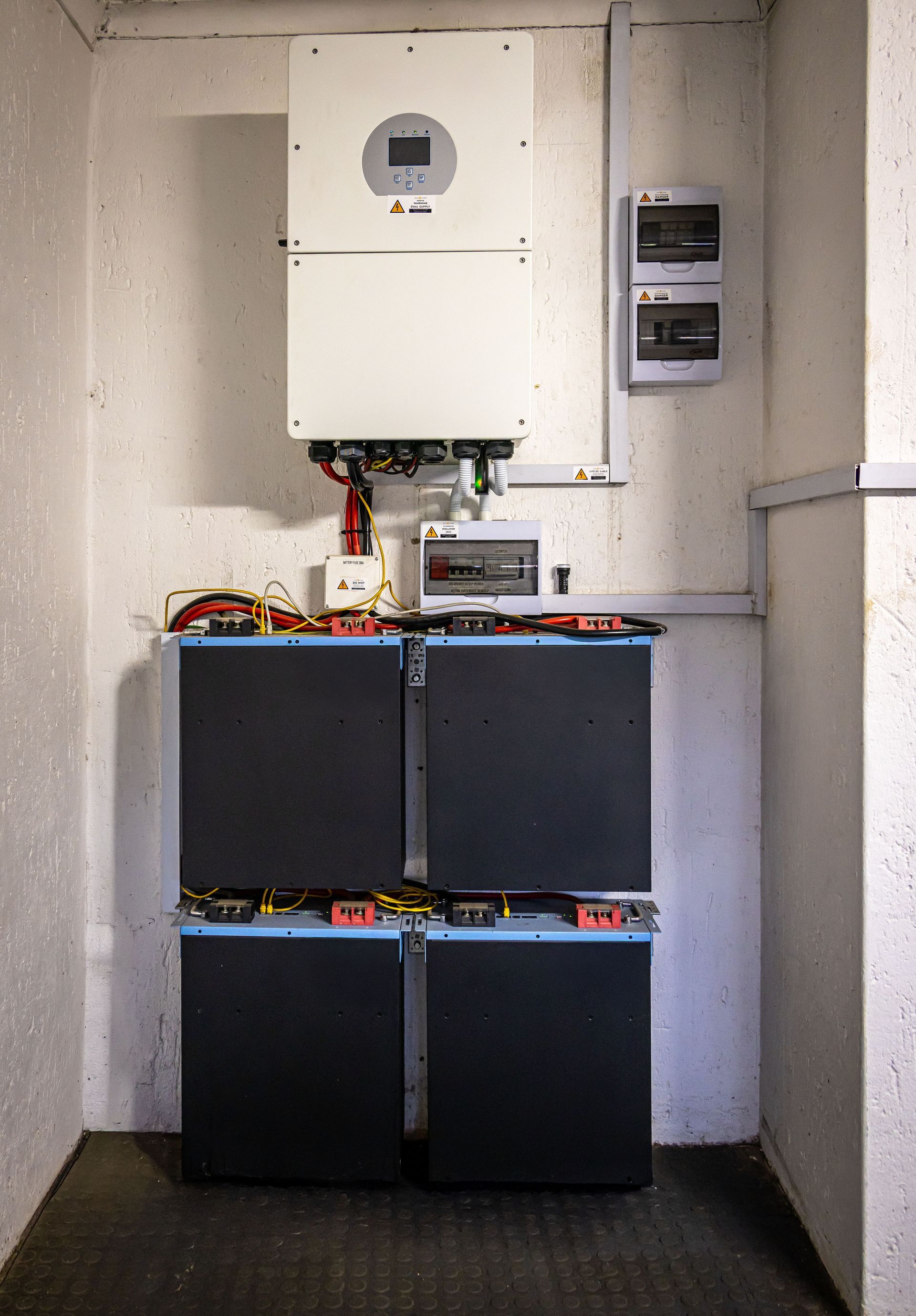
The South African solar storage market has changed faster than almost any other segment. Load shedding pushed homeowners and businesses toward battery backup, and while our focus here is on solar storage rather than stand-by power, there is a meaningful distinction worth understanding. Solar storage batteries are designed to cycle daily, accepting charge from panels during daylight hours and discharging overnight or during high-demand periods. That daily cycling profile rewards the long cycle life of LiFePO4 chemistry directly.
For solar buyers, compatibility with your inverter matters as much as the price. Not every lithium pack communicates cleanly with every inverter brand, and a mismatch can cause charging errors or reduced performance over time. Getting the spec right before you buy saves a lot of frustration later.
For commercial solar installations, such as a factory or retail site in and around Alberton running a large PV array, the battery bank sizing process is quite technical. Discharge rate, peak demand loads, and the number of days of autonomy all feed into the final specification. Getting independent advice before committing to a system size is always worthwhile.
Comparing Costs Fairly
A fair comparison between solar battery options needs to look beyond the price per kilowatt-hour of installed capacity. Cycle life warranty, depth of discharge rating, operating temperature range, and round-trip efficiency all affect how much usable energy you actually get per rand spent over the system's life. A pack advertised at a low upfront price but rated for only 1,500 cycles will cost more per cycle than a well-specified pack rated for 4,000 cycles, even if the initial number looks attractive.
Temperature also plays a bigger role than many buyers expect. The East Rand runs hot in summer, and battery cells sitting in an unventilated enclosure can exceed 40 degrees Celsius on a January afternoon. Quality packs with proper thermal management handle this without significant capacity loss, while cheaper units may derate or degrade faster under the same conditions.
Finding the Right Partner in Alberton
Lithium battery prices are not fixed. They move with exchange rates, raw material costs, and shipping logistics, which means a quote from six months ago may not reflect today's market. Working with a supplier who knows your application, can source across multiple brands, and gives you an honest answer when a cheaper option is genuinely suitable is worth more than chasing the lowest number on a comparison sheet.
CHASE Technologies operates out of Alberton and focuses specifically on industrial, recreational, and solar lithium solutions. We are not generalists trying to stock everything; we focus on the applications where lithium technology genuinely outperforms the alternatives. If you are evaluating a forklift battery upgrade, specifying a solar storage system for a commercial site, or fitting out a recreational vehicle, we are happy to walk through the numbers with you and give you a realistic picture of what current lithium battery prices mean for your specific situation.
Reach out to the CHASE Technologies team for a straightforward conversation about your requirements. No pressure, no jargon, just an honest look at what your application needs and what it will cost.
Contact us Today
Contact one of our consultants for more on our products and services